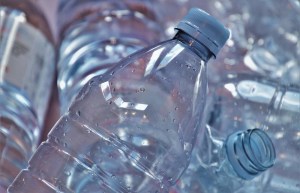


 Plastic bottles. Photo via Pixabay
The Carlsbad City Council recently passed a policy banning plastic bottles at both public and private events sponsored by the city. According to city documents, the intent of the ban is to “reduce greenhouse gas emissions” and litter.
A look at the supporting data shows this will be as effective as switching from salads to ice cream to lose weight.
The fact is that all types of beverage containers can be littered by irresponsible consumers. And plastic’s carbon footprint isn’t half that of many common alternatives.
Cue the data. Glass bottles and aluminum cans produce more greenhouse gas emissions, not less than plastic bottle production.
Glass bottles are the most energy-intensive packaging option of the three. Not only does it take more energy to produce glass, but glass is much heavier than either aluminum or plastic. This added weight means more fuel for transportation.
One study from Imperial College London revealed that a mass transition from plastic bottles to glass bottles would generate as much additional carbon dioxide emissions as 22 large coal-fired power plants.
Aluminum doesn’t fare much better. A 2020 litter survey by Keep America Beautiful revealed that aluminum beverage cans are littered five times as often as plastic water bottles.
Aluminum production generates twice as much carbon dioxide as the production of a plastic bottle. Moreover, the Environmental Protection Agency notes that aluminum production is a major source of global perfluorocarbon emissions, which have up to 9,200 times the global warming potential of carbon dioxide.
And that’s not where aluminum’s very dirty secrets end.
Aluminum is made from bauxite harvested from strip mines in poor countries. The harvesting process coats nearby communities in a thick red dust that is as harmful to the environment as it is to the health of those who live in the area.
The dust kills vegetation, pollutes rivers, and leaves those who breathe it in with an increased risk of cancer and Alzheimer’s disease. Pollution from one mine was so damaging that it prompted riots.
What about so-called “biodegradable” products? Carlsbad noted that compostable alternatives would be allowed but most products in this space cannot be recycled. And the claims that they’ll magically biodegrade are questionable.
False claims of biodegradability are rampant, according to a 2020 study from Environmental Science and Policy. And many products only biodegrade in ideal laboratory conditions.
Carlsbad officials are right to focus on pollution and littering.
The redeeming quality of glass and aluminum is that they can both be recycled. But so can plastic bottles. Clear bottles are made from PET plastic which is identified by the #1 in the chasing-arrows logo. Recycled PET, known as RPET, can be turned into clothing, furniture, and new bottles.
In fact, CalRecycle just released its 2021 report on recycled plastic usage in beverage containers. The report revealed that many of the largest beverage producers in the state were ahead of the state’s recycled content standards — well on their way to matching the state’s requirement that bottles be made of 50 percent recycled plastic by 2030.
A representative from Coca-Cola noted that the difficulty was in finding enough recycled plastic to meet demand. The companies are happy to use it — if it’s available.
By boosting the recycling of all beverage containers — glass, aluminum, and plastic — Carlsbad could be a leader in reducing waste.
Will Coggin is the managing director of the Center for Accountability in Science.
ᐧ